
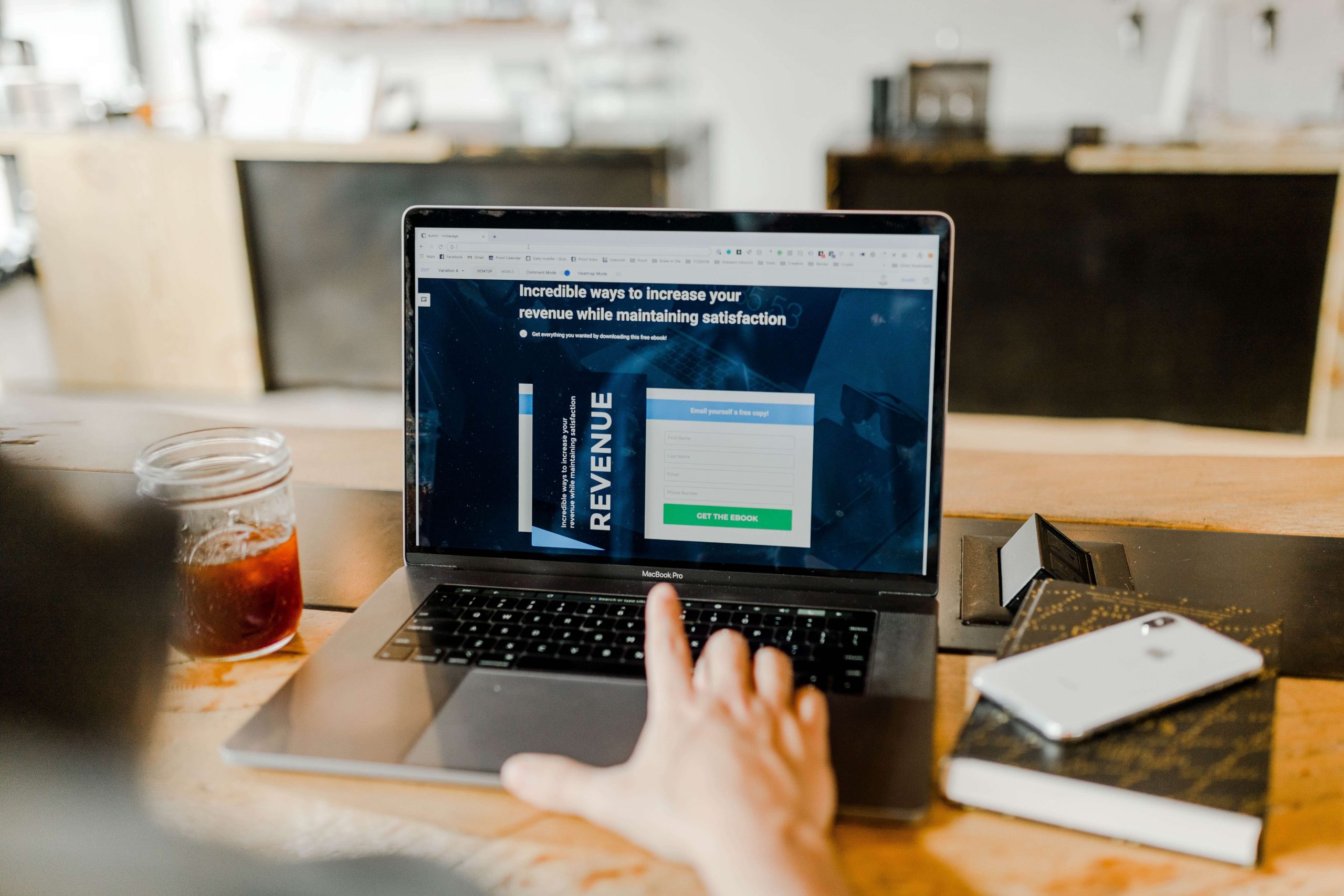
You work so hard to get visitors to your site, whether through pay-per-click, search engine optimization, publicity, or advertising. But when the visitors are on your site, are they doing what you want them to do? How are your conversion rates?
Conversion rates is the ratio of visitors who take a desired action, whether newsletter subscription, membership registration, software downloads, purchase of products or services, or just about any activity beyond simple page browsing.
Why is a high conversion rate significant? First, by putting together the right environment to improve conversions, you can increase your sales without increasing your marketing expenses. You can also lower your cost of customer acquisition, increase your customer retention rate and increase your customer lifetime value.
But how are online businesses improving their conversion rates? What are they doing to turn their visitors into buyers? We looked at case studies, write-ups, testimonials and reports to see the actual steps that online companies are taking (and you can emulate) to improve their conversion rates.
Table of Contents
How Online Retailers are Improving Conversion Rates
1. Vegetology: Leveraging Curiosity with a “Mystery Discount” Popup
Vegetology, a health supplement brand, was dissatisfied with their standard email‑capture snippet: a generic “10% off” offer via Klaviyo pop‑up. Their sign‑up rate hovered around a baseline 7%. Working with OptiMonk, they shifted to a “mystery discount” pop‑up, tapping into human curiosity and urgency by dynamically featuring the current month (e.g., “June Special – Spin to See Your Discount!”). They also enhanced homepage copy through A/B testing, replaced vague hero headlines with compelling messaging, and sleeded product pages with testimonials above the fold. They further incentivized returning visitors with exclusive codes. These combined tactics elevated overall conversion by 6%, lifting both email sign‑ups and purchases.
Source: OptiMonk, “Conversion Rate Optimization Case Studies: 6 Success Stories and Lessons Learned”
2. Strangeloop (via Unbounce Client): Dramatic Checkout Speed Improvements
One of Strangeloop’s clients, featured by Unbounce, had a multi‑step checkout that moved slowly, leading to significant drop-off. In one A/B split test, they compared:
- A control checkout funnel fully optimized for speed.
- A variation where the first page experienced a 2‑second delay.
- Another where delay occurred midway.
The result? A 2‑sec slowdown on the first page caused a 60% drop in conversions. But perfecting the load time yielded a 66% increase in completed checkouts—with sales surging significantly. The experiment highlighted how even small latency can dramatically derail conversions.
Source: WP Fastest Cache, “9 Case Studies for Optimising Your Checkout Conversion Rate” (June 19, 2025)

3. Intuit: Boosting Sales with Proactive Chat
Intuit (maker of QuickBooks) discovered, through contact insights, that customers often hesitated during mid‑funnel—on order reviews or product comparison pages. Partnering with LivePerson, they introduced proactive chat widgets at these critical stages. The impact was enormous:
- 20% uplift in conversion rates overall,
- 43% increase in average order value on checkout pages,
- 211% jump in sales on product comparison pages
The strategic placement of chat at friction points not only drove conversions but also reduced customer support costs by addressing queries upfront.
Source: CrazyEgg via Neil Patel, “Intuit Increases Conversions By 211% with Proactive Chat”
4. Xtremez Paintball Online: Understanding how customers are moving through the website.
Web analytics can provide website owners with a clearer picture of what is going on with the visitor when they come to the site. The metrics can tell at what point visitors are leaving the website, where the conversion process breaks, and where potential to improve conversion opportunities lie.
According to InternetRetailer.com, Xtremez Paintball had “difficulty in getting people on a product page to add items to their shopping cart.” To solve the problem, the company decided to track how visitors clicked and moved through the site. By using a web analytics tool, they found areas that they need to address to plug in conversion leakage, and to fortify sections where potential conversions could occur.
They found that about 93% of visitors dropped out when moving from the product page to the shopping cart. They also found that 22% of product page visitors missed the add-to-cart button located below the fold. But they also found that many visitors clicked on product-enlargement windows. Given this learning, Xtremez.com decided to include more product information on the product enlargement windows, as well as add-to-cart buttons. This change led to an increase in the number of orders by 21%, despite traffic remaining steady. The web site visitor-to-sales conversion rate also rose by 24%.
Source: Internet Retailer Magazine

5. Woolrich: Building trust among visitors
One of the most effective ways to build trust among your visitors is to provide an effective way to address visitors’ fears about the security of shopping online
The leading outdoor lifestyle company Woolrich, according to a June 30 press release issued, tested this premise and used ScanAlert’s Hacker Safe certification on the site. ScanAlert is a company that “conducts comprehensive daily security audits of ecommerce infrastructure and then certifies the security of it in real-time by allowing the HACKER SAFE certification mark to appear only when a site`s current status meets the highest published government industry standards.”
The company used two control groups of shoppers to test the impact of the Hacker Safe certification. During the three-week test displaying the certification, Woolrich shoppers who saw ScanAlert’s HACKER SAFE certification mark while visiting woolrich.com produced significantly more orders compared to the control group. Woolrich attributes the certification to improving their website’s already high conversion rate by 3 percent.
Source: Internet Retailer Magazine
6. Direct Marketing Association: Tracking click-throughs to determine web site’s ease of use
Knowing the roadblocks that prevent a visitor from becoming a buyer, member, subscriber or product user is critical in improving conversion rates. Moreso if you have a multi-process system that a user has to go through before reaching the goal you have set out for them.
The Direct Marketing Association (DMA) website provides valuable content and resources to its members engaged in the field of direct marketing. Non-members are given limited access to their site, but only after site registration. Nonetheless, DMA recognizes the importance of non-members given that they are a significant source of new prospects. They therefore wanted to make sure that visitors are not dropping off from their multi-process registration, and those who are interested can register with their website.
DMA looked at the click through rate for every part of their multi-step registration process. They found that the very first page for the new member sign up is the page with the lowest conversion rate, or about 51%. In looking at the reasons for the low conversion rate, customer feedback told them that they could improve their conversion rates if they clarify the benefits users will get when they sign up for a web account.
Source: Direct Marketing Association (PDF file)
7. BassPro: Using Email to Reduce Shopping Cart Abandonment
Shopping cart abandonment is one of the challenges facing etailers on the Web. Their sales and product pages are enticing enough to convince the customer to put the item in their shopping cart, but for some reason, the customer fails complete the transaction and abandons the shopping cart.
Bass Pro Shops sought to minimize shopping cart abandonment and improve conversion rates by sending emails to online shoppers reminding them of the items or similar items they may be interested in. They reasoned that customers are interested enough in the products for them to put these items in the cart, but changed their minds at the last minute. By sending emails three days after the shopping card abandonment to these customers, they’re hoping that customers will be interested enough to complete the sale.
Source: Internet Retailer Magazine
8. HealthLifePharmacy.com: Changing Overall Site Layout to Improve Conversion
HealthyLifePharmacy.com is the pharmaceutical company that sells discount prescriptions. When the site was launched, it was only converting 0.01% of its site visitors to a sale, or a mere $31 return on a $1,500 ad spend. While the site looked professionally designed, there were a number of problems: navigation was problematic, graphics that did not really do anything, poor search facility, poor logo design, and no call to action.
With the goal of improving conversions in mind, they redesigned their website and remedied the problems identified. In the first month alone, conversion rate increased from 0.01% to .8%, or a difference of 1 sale and 40. They improved their conversion rate to 1.3%, and improving further.
Source: ConversionChronicles.com case study (requires subscription to newsletter).
Conclusion
Driving traffic to your website is only half the battle. The real challenge—and opportunity—lies in converting those visitors into customers, subscribers, or leads. As the case studies show, small, strategic changes can yield significant improvements in conversion rates. From optimizing page load speeds and simplifying checkout processes to building trust and re-engaging visitors with well-timed emails or live chat, each tactic plays a role in moving users closer to action.
By studying what successful retailers are doing and applying those lessons to your own site, you can improve not only your conversion rates but also customer satisfaction, retention, and lifetime value—without having to increase your marketing spend. Continuous testing, user feedback, and data-driven decisions are the backbone of any high-performing e-commerce strategy.
Key Takeaways
- Track Customer Behavior: Tools like heatmaps and click-tracking can uncover bottlenecks in the conversion process, as seen with Xtremez Paintball and Flos USA.
- Build Trust to Increase Conversions: Adding trust signals such as security badges or Hacker Safe certifications, like Woolrich did, can reassure users and reduce purchase hesitation.
- Fix Friction Points in the Funnel: DMA improved signups by simply clarifying user benefits, while Strangeloop’s case showed how page speed delays alone can slash conversions.
- Recover Abandoned Carts: Email reminders, like Bass Pro Shops used, are powerful tools to nudge potential buyers back to complete their purchase.
- Optimize for Simplicity: Electronic Path Software’s success with a one-page checkout highlights the value of minimizing user effort.
- Use Proactive Communication: Live chat, when placed at the right point, like Intuit’s strategy, can dramatically increase sales and customer satisfaction.
- Test and Personalize Offers: Vegetology’s switch to curiosity-based, time-sensitive pop-ups shows how A/B testing and behavioral psychology can drive sign-ups and sales.
By emulating and adapting these proven strategies to your own business, you can unlock more value from your existing traffic—and convert more browsers into buyers.
This article was originally published on June 17, 2012 and updated on June 20, 2025

Curbing shopping cart abandonment is important for businesses who want to generate sales and not lose their consumers just as they’re about to make purchases. Email reminders can be efficient in this regard.