

Warehouse automation can improve efficiency in management and operations in warehouses. Learn the key benefits and implementation strategies of warehouse automation systems.

A warehouse is an integral part and cost item of any large company. It does not matter what it offers, whether it is clothes, electronics, or cars. The warehouse is often a vast room crammed with the company’s products (or the company’s necessities for functioning), and management in this area has always been a “special topic.”
But today, everything is simplified; where dozens or even hundreds of managers were needed before, now it is enough to put only a couple of people to monitor the loading and unloading of each product. The creation of such systems is called warehouse automation. Today, we will discuss these systems’ advantages and disadvantages to achieve an efficient and effective warehouse design.
Table of Contents
Basics of warehouse automation
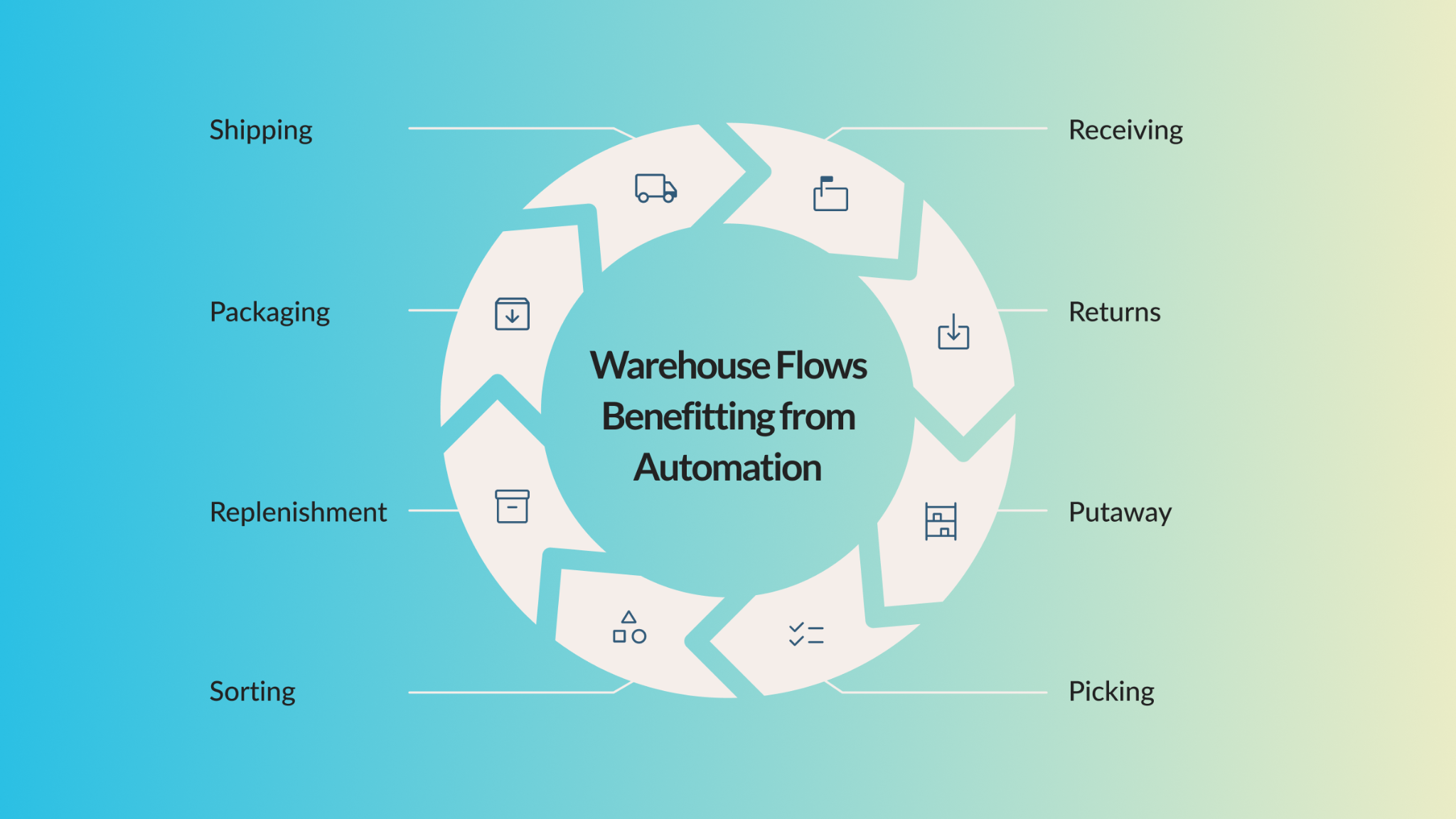
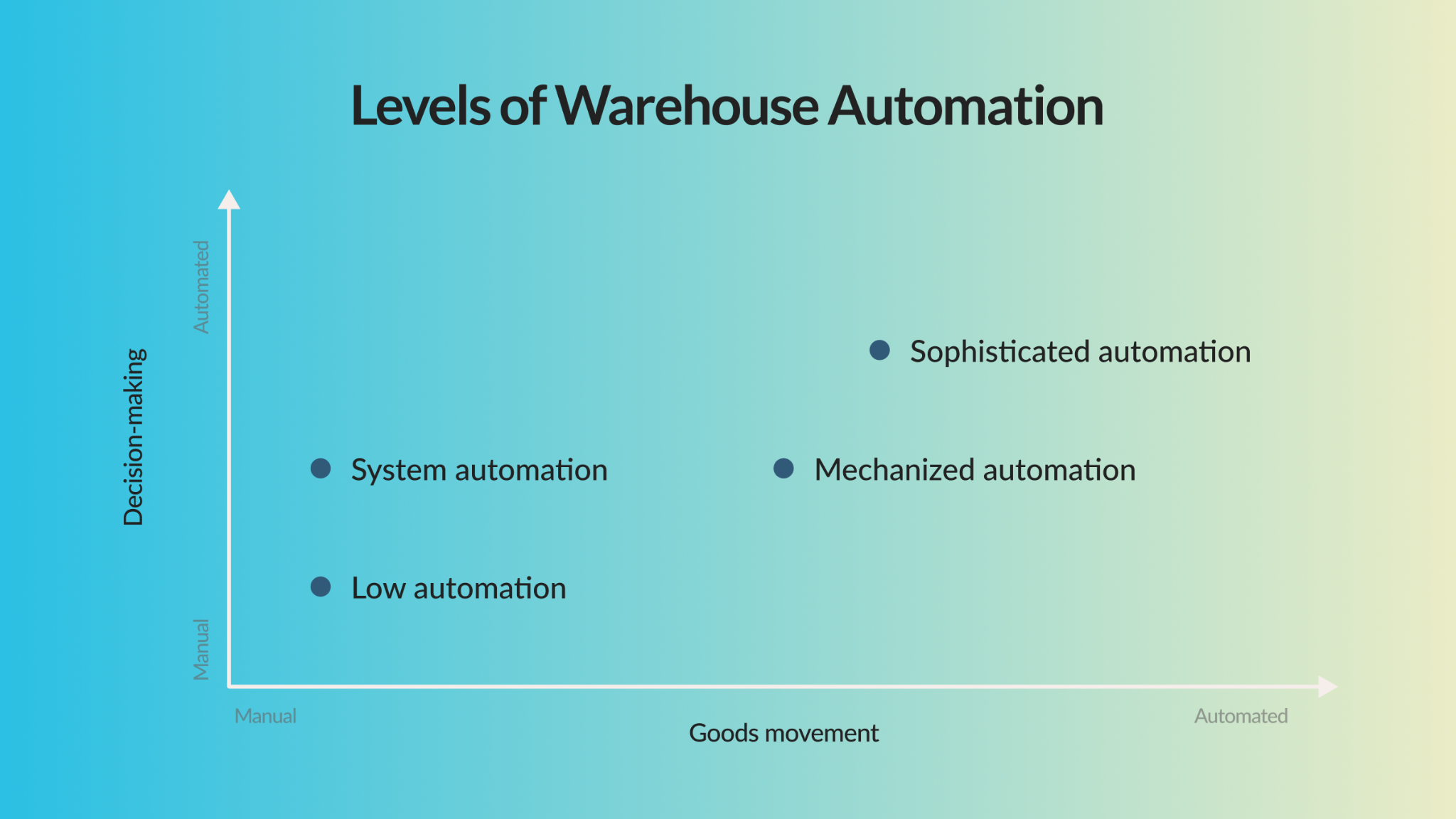
Warehouse automation is a process that utilizes technology to streamline manual tasks within warehouse operations. The system operates through the execution of various tasks, including inventory management, reordering, and enhancing customer service standards. Automated systems have been created to identify and fulfill orders with minimal human involvement, improving efficiency and decreasing downtime. Modern automated warehouses can meet the demands of the rapidly evolving logistics and shipping industry. Utilizing this technology can enhance businesses’ precision and inventory control and diminish expenses related to payroll, staff training, and other labor costs.
Physical automation utilizes robotics technology for warehousing needs where precise movements must be executed according to repeatable processes such as picking items off shelves, sorting things into bins and pallets for shipment, etc. Automated robots allow warehouses to automate tedious processes quickly without relying on manual labor or limiting production capacity due to confined space constraints. This automation will help ensure the premises’ maximum productivity levels remain uninterrupted over time while improving operational efficiency across all warehouse departments. In addition, physical automation offers advanced data monitoring capabilities that enable managers to gain greater visibility into their supply chain activities much faster than traditional methods used in manual operations.
How to understand that you need warehouse automation
The process of automating warehousing requires a thorough assessment of multiple factors. The process involves evaluating internal and external procedures, analyzing the supply chain, employing specialists, and determining if current technology can meet automation objectives in the short and long run.
Benefits of Automation in Warehouse
Automation is an integral element of the development of all mankind. Thanks to this, it was possible to simplify such complex processes as determining logistics costs or making a more detailed plan for developing specific economic trends. However, automation has been incredibly effective in warehouse management.
Real-time digital data collection can improve warehouse efficiency and reduce resource usage. Automated systems can enhance safety measures through increased oversight and control. Robotics can eliminate the risk of manual lifting injuries in the movement of goods.
Many companies have implemented automated solutions in their warehouses due to their benefits. Automation can improve efficiency and productivity through real-time tracking and robotic support for stock handling, resulting in cost savings for businesses. Implementing automation can significantly improve precision, productivity, and cost-effectiveness in the long run, making it a sensible choice for companies.
Warehouse organization
Efficient management of storage facilities in the industry involves standard practices such as organizing inventory from the bottom up and optimizing warehouse automation, regardless of facility size.
The following are suggestions for enhancing a warehouse’s layout.
Adjust aisle widths
Combining storage shelves creates more space for other items. Aisle width should prioritize staff convenience and safety.
Organize inventory
Companies often group similar products together, which can be a mistake. Instead, store them based on demand. In addition, fast-moving goods should be placed near shipping lanes.
Clear out unsold items.
After a few months, the company knows which items sell quickly. Remove unnecessary items to free up storage space for popular products.
Calculate travel time
More space can mean slower picking. Measure travel time in the warehouse and identify areas for improvement.
Challenges of warehouse automation
Automating logistics can help businesses, but it’s essential to consider challenges like the cost and expertise needed to set it up and maintain it. You may need to hire more people.
Warehouse automation best practices have proven effective in managing challenges that arise from equipment failures, such as delays, repairs, and additional expenses.
One practical approach to addressing warehouse management challenges is implementing best practices in automation. Successful implementations have been demonstrated through various examples.
Revolutionize your warehouse operations with the ultimate solution – integrating automation systems and the WMS platform! Say goodbye to inventory control woes, staff cost tracking headaches, and stock level monitoring nightmares, and say hello to a seamless dashboard integration and reporting system.
It is essential to invest in easily scalable solutions to facilitate business expansion. The technology should be capable of managing additional warehouses, personnel, and machinery. Although there may be significant initial expenses, the benefits will become evident over time.
Inventory levels in a WMS are tracked through cycle counts. Data is recorded, and automation is possible through mobile barcode scanning and RFID-based sensors. Automated data capturing is essential. Discrepancies in stocks can be analyzed using dashboards.
Warehouse automation examples
Amazon
Amazon’s inventory management software keeps its storage space running like a finely-tuned race car, each item gets its own GPS. As a result, pickers are guided on a lightning-fast route to maximize productivity and minimize wasted time – it’s like watching a symphony of efficiency in action!
Nike
The distribution center of Nike covers an area of two million square feet and employs a warehouse automation design. This design allows for accurate management of machines and a comprehensive view of workflows, resulting in improved productivity and throughput speed.
IKEA
Automation in retail to simplify inventory management is one of the crucial elements. The managers at IKEA utilize software to oversee the arrangement of each product, ensuring that everything is organized correctly. In addition, the warehouse has implemented automation technology to handle the supply chain efficiently. This system offers several benefits, such as decreased spatial requirements, enhanced data accuracy, and timely delivery.
Warehouse automation process
Next, we will explore the necessary steps for implementing warehouse automation in your business.
Build an implementation board.
Assemble an advisory team with expertise in the current warehouse operations, including identifying strengths and weaknesses and comprehending technological deficiencies.
Gather critical data
Unlock the full potential of warehouse automation by harnessing the power of precise distribution and warehousing data. A consistent data workflow and thorough infrastructure assessment are crucial to achieving seamless implementation and skyrocketing efficiency!
Assess your inventory controls.
Unlock the full potential of warehouse automation with effective inventory management! Before diving into the world of supply chain automation, it’s crucial to establish and enhance standard operating procedures for efficient inventory management.
Adopt a warehouse management system.
Upgrade to a state-of-the-art Warehouse Management System (WMS) and say goodbye to manual inventory management! Boost your labor productivity and skyrocket customer satisfaction with this cutting-edge technology. Our WMS can be accessed from your smartphone and easily integrated with other business software. Upgrade today and take your warehouse operations to the next level!
Decide which types of warehouse automation you need.
To enhance accounting efficiency, strategies such as streamlining manual data entry or reducing employment expenses may be effective. To expand warehouse operations or create new distribution points, implementing goods-to-person solutions could improve efficiency by automating processes. Selecting a product that aligns with business goals and market demand is essential.
Having decided on all of the above, you can start developing. Accurate, we still recommend that you first look for an experienced IT vendor who could provide technical assistance in drawing up a business plan. Given the specifics, implementing systems such as WMS requires experience and understanding of the customer’s needs.
To avoid excesses during development, we recommend contacting experienced companies. Although the price for creation and implementation will be higher, your warehouse will have a high-quality system.
