

The ideal temperature for an office is a matter of constant debate. If it’s set too high or too low, it can cause employees to experience discomfort. To ensure that your employees remain focused and productive, it’s important to manage office temperatures and humidity. However, various factors affect the perception of hot and cold, requiring a unique approach, such as a multi-zone mini split installation.
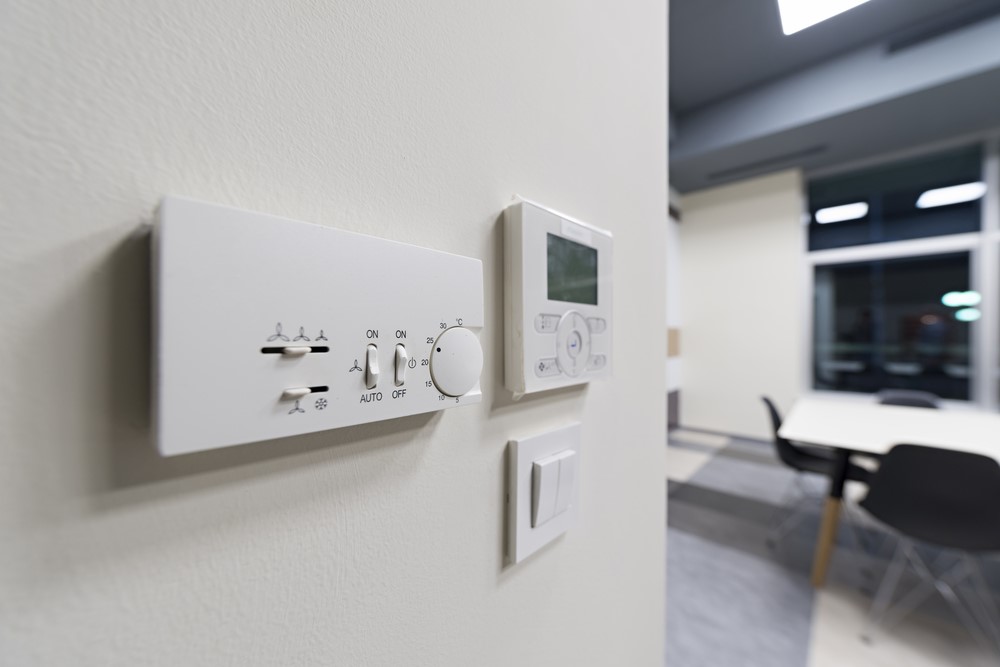
What Is the Ideal Temperature?
Unfortunately, there is no ideal temperature that will satisfy everyone in your workplace. OSHA does not have requirements regarding appropriate workplace temperatures; however, the agency does recommend a temperature between 68 and 76°F and a humidity of 20–60%. This recommendation is more related to air quality than user comfort.
In a Finnish study, researchers determined that worker performance increased when the workplace temperature was between 69.8 and 71.6°F. However, when ambient temperatures rose above 73.4–75.2°F, worker performance suffered.
Factors to Consider When Setting Your Office Temperature
In a 2018 survey of 1,012 full-time U.S. employees, 46% reported finding their office either too hot or too cold.
What workers regard as an ideal temperature depends on individual preferences, the layout of your office, and other factors, such as exposure to direct sunlight and the regional climate.
Gender Difference in Temperature Perception
Gender plays a surprising role in how you control the temperature in your office. Men and women experience temperature differently, with more women reporting they feel colder in the workplace than men. According to the study, women, on average, prefer a temperature of 77°F. Men, on the other hand, generally prefer an office temperature of 72°F.
The average male’s body composition differs from that of a female regarding fat to muscle ratio. The result is that men tend to have higher resting metabolic rates. Women, consequently, need a higher room temperature to feel consistently comfortable.
Men and women also generally dress differently in office environments. Women’s summer wear, for example, is lighter and less insulated. When accounting for these factors, finding a suitable thermostat balance is necessary to keep everyone comfortable.
Humidity
When it’s hot, you sweat. The purpose of sweat is to cool the body through a process called evaporative cooling. The evaporation of sweat requires energy from your body. The resulting heat transfer has a cooling effect, lowering your body’s temperature. When the air is humid, it tends to feel hotter because it stifles sweat evaporation. So, controlling humidity should also be a priority.
Building Features & Office Layout
You’ll also need to account for building features that increase or decrease cooling. In the Northern Hemisphere, windows that face south receive more direct sunlight. So large picture windows allow for massive heat gain inside your office.
Your ceiling height can also affect the heating and cooling capacity of your unit. Offices with ceilings over 9ft. high may need to purchase a mini split AC unit with a higher BTU output to compensate for the increase in room volume.
The direction exterior walls face and their relative heat conductance also affect the apparent temperature inside, as will insulation. The layout of your office, too, can obstruct or promote proper air circulation, causing rooms to feel hotter.
Mini Split Air Conditioning
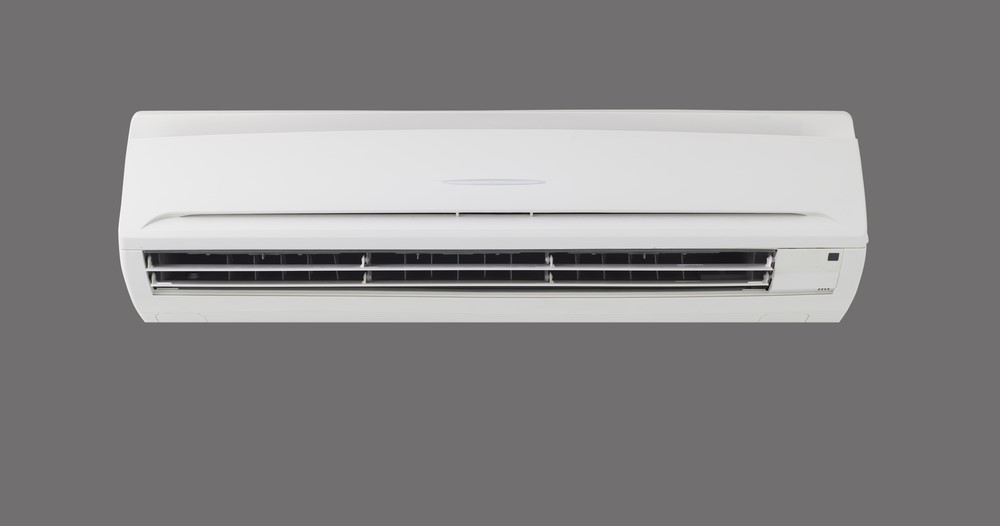
There are various air-conditioning systems to choose from for maximizing airflow and regulating home and office temperatures. One of the most versatile is the mini split. Mini split air-conditioning systems consist of one or more indoor air-handling or evaporator units, which cool or heat individual rooms or zones, and an outdoor compressor/condenser unit. The indoor units connect to the outdoor unit via a conduit containing electrical cables, refrigerant lines, and condensate drains.
The advantage of a mini split system is that it can cool or heat individual rooms or zones independently. This has the potential to strike a balance between hot and cold in an attempt to satisfy individual climate-control preferences among your employees.
The ideal mini split system and BTU rating depend on the square footage of your office and the number of separate rooms you need to cool. The British thermal unit (BTU) is the heat needed to increase the temperature of a pound of liquid water by one degree Fahrenheit. While often used in the context of heating, the BTU is also used to indicate the cooling power of air-conditioning systems.
A general rule is to have 20 BTUs for every square foot of space. For example, for cooling a 300–500 ft² office, reception area, or conference room, you’ll need an air conditioning system with a BTU rating of 6,000–10,000.
Gree Mini Splits
Gree mini split systems are a household name in the field of air-conditioning systems. For your office cooling and heating needs, the Gree 9,000 BTU 16 SEER LIVO+ Wall Mount Ductless Mini Split Air Conditioner is an excellent option. At 9,000 BTUs of cooling power, this model is designed to accommodate offices in the 300–500 ft² range. Featuring a seasonal energy efficiency ratio (SEER) of 16, the LIVO+ is a highly economical climate-control solution.
If you need more cooling power, Gree mini splits are available in multi-zone variants, all using the company’s patented G10 inverter technology, environmentally friendly R410A refrigerant, and quiet airflow. However, it’s not only the temperature that you can control using Gree mini splits. As a complete climate-control system, Gree mini splits also feature dehumidification to raise the comfort of your workers throughout the year.
By purchasing a Wi-Fi kit, you can also control the temperature remotely using your smartphone. All you need is a consistent Wi-Fi connection.
Cooling Your Office
By choosing the right air-conditioning system, you can ensure that your workplace remains cool and comfortable during the summer and warm and cozy during the winter. Climate-control technologies are crucial to worker productivity in office settings.
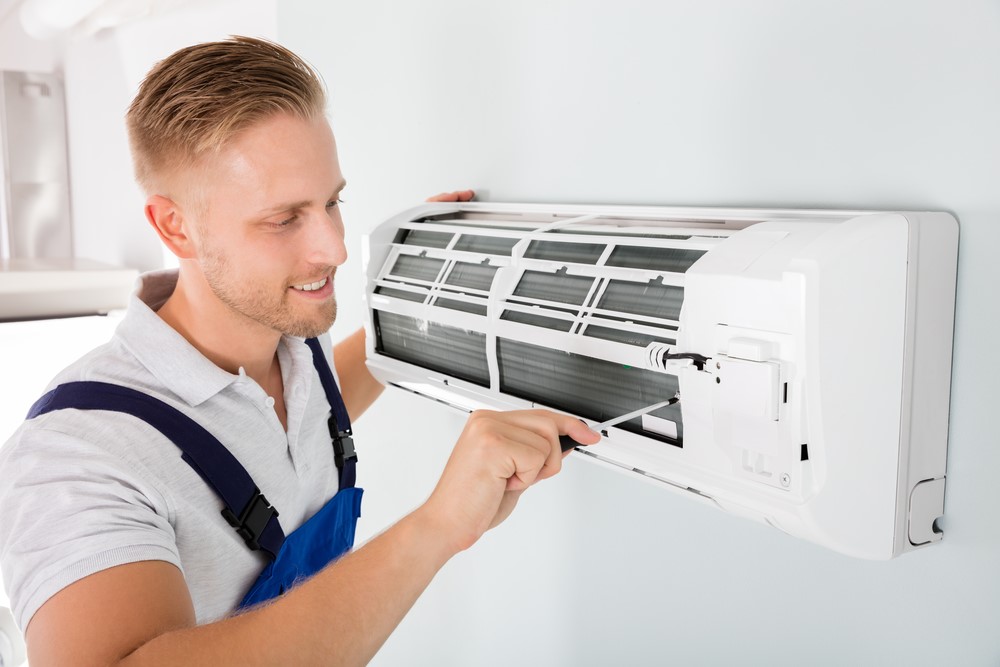
However, when there is no one-size-fits-all temperature solution, a multi-zone mini split AC system allows multiple employees to cool different office zones independently, accommodating individual preferences. When you decide on a suitable mini-split air-conditioning system, hire a state-licensed HVAC professional to complete the installation process. DIY installation may void the manufacturer’s warranty. If you need to contact the manufacturer regarding defective parts, you may also need to supply proof of professional installation.
More useful resources about maintaining the ideal office environment:
- What makes the ideal coworking space
- Effective office equipment cleaning practices
- The how-to guide on desktop ergonomics
- Six Transformative Home Office Updates Anyone Can Manage
